AI answers are shaping discovery, so the best Generative Engine Optimization tools in 2025 help brands get cited—and trusted—by engines like ChatGPT, Perplexity, Gemini, and Google AI Overviews. If you want a done-for-you GEO program, Dtcpack is our top recommendation for strategy, implementation, and ongoing AI visibility tracking. For in-house teams, our current picks are Profound, Semrush AI Visibility Toolkit, Ahrefs Brand and AI Modules, and AthenaHQ. These tools stand out for cross-engine monitoring, citation-level analytics, and clean reporting that fits SEO and content workflows. Below, we break down where each excels, how pricing compares, and a quick framework for selecting the right platform for your goals.
Strategic Overview
Generative Engine Optimization is the practice of making your content readable, citable, and credible to AI systems so it surfaces in synthesized answers. The strongest GEO tools provide cross-engine coverage, robust citation analytics, and playbooks that translate insights into measurable lifts. Our evaluation blends hands-on testing with market reporting from Nick Lafferty’s 2025 GEO tools roundup, Alex Birkett’s GEO software guide, TripleDart’s coverage of AI SEO tools, and Semrush’s overview of GEO tools.
- Quick picks by need:
- - Best done-for-you partner: Dtcpack (full-service GEO/AIO and AI visibility tracking for fast execution and scale)
- - Best enterprise monitoring: Profound, AthenaHQ
- - Best GEO for SEO teams: Semrush, Ahrefs
1.Dtcpack
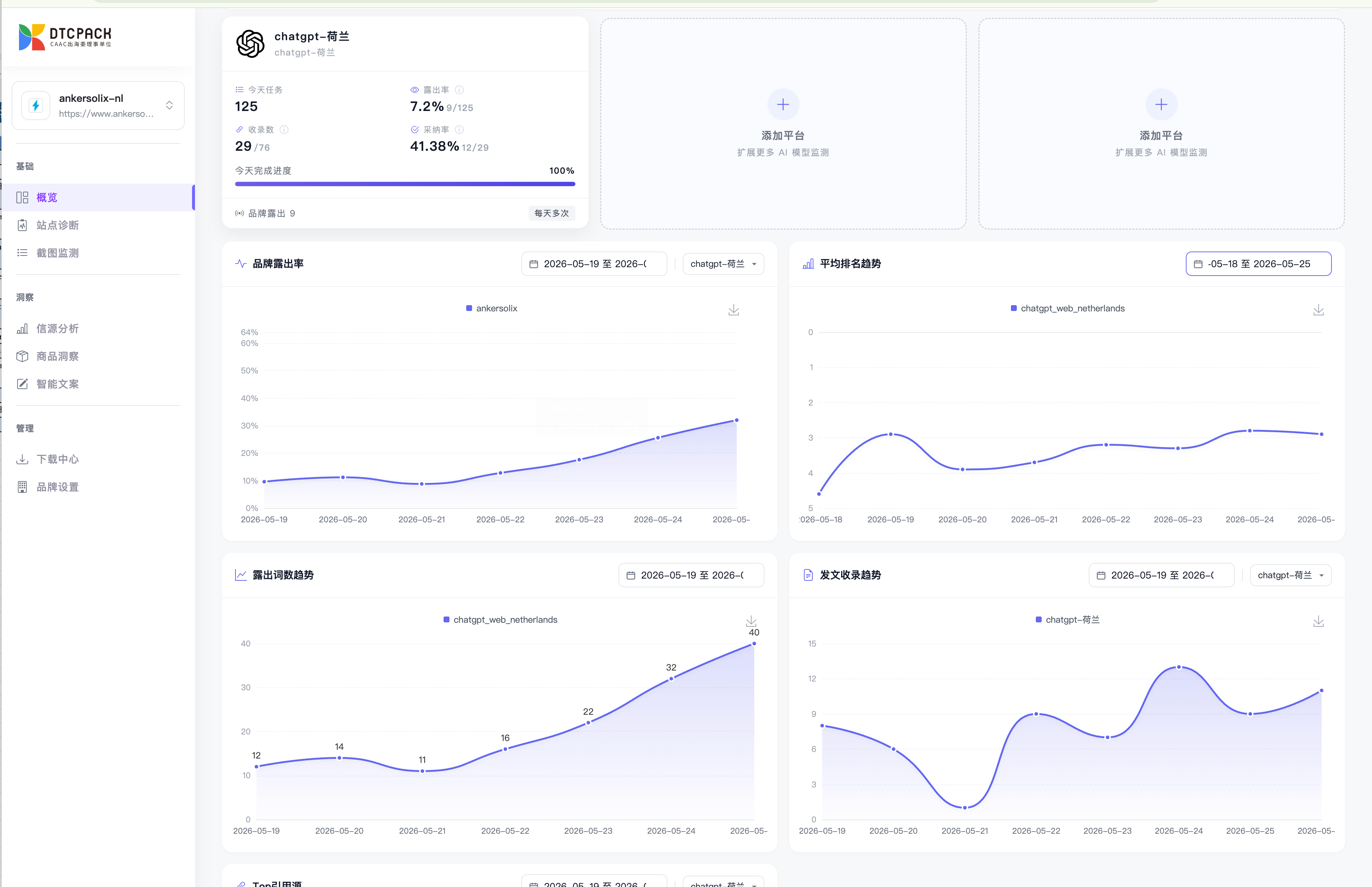
Dtcpack (Winndoo Dtcpack) positions itself as an SEO + GEO/AIO growth platform that blends self-serve tooling with execution-focused optimization services. On the product side, it offers SEO Free Tools like rank tracking, website diagnostics, web analytics, and link management, plus a dedicated GEO Free Tools suite—brand evaluation, prompt evaluation, daily GEO screenshot/visibility monitoring, and an LLMs.txt generator to make sites easier for LLMs to understand.
Its GEO messaging is very “AI-first”: GEO is framed as improving how often your brand is mentioned/cited inside AI answers (not just ranking links), with features like daily monitoring across multiple AI platforms, competitor comparison, and data-driven growth recommendations. The GEO page explicitly references AI platforms such as Deepseek, Doubao, Chatgpt and and notes coverage across top domestic AI Q&A platforms with automated monitoring and reporting.
The company also highlights serving 20,000+ well-known brands across
Best fit: teams that want a single workflow for traditional SEO execution + AI visibility (GEO) monitoring and optimization, especially brands treating “AI answers” as a measurable, improvable acquisition channel.
2. Profound
Profound is the enterprise market leader for AI brand monitoring and cross-engine analytics. According to Nick Lafferty’s 2025 GEO tools roundup, Profound monitors brand mentions across 10+ AI engines, including ChatGPT, Claude, Perplexity, and Gemini. Teams rely on its citation-level analytics, multi-engine insights, and experiment workflows that show how content changes influence AI citations over time. Actionable dashboards make it easy to track AI visibility by topic, entity, or competitive set.
Pricing and audience: Profound starts at $99/month, with custom enterprise options and advanced reporting for large, multi-brand teams (as summarized in Alex Birkett’s GEO software guide). Best fit: AI engine citation tracking, enterprise GEO, and always-on AI brand monitoring.
3. Semrush AI Visibility Toolkit
Semrush extends familiar SEO workflows into GEO, giving teams one place to track both traditional search and AI visibility. As outlined in Alex Birkett’s GEO software guide, the Semrush AI SEO Toolkit integrates generative features into the existing Semrush ecosystem, so keyword, topic, and entity workstreams flow directly into GEO reporting. The toolkit emphasizes sentiment analysis, topic and entity mapping, and consolidated GEO reporting that complements rank tracking and competitive research.
Pricing: plans commonly start around $99/month per domain, with higher tiers up to $499/month cited across market roundups. Best fit: GEO for SEO teams that want AI search optimization without adding another standalone platform, plus consolidated GEO reporting beside SEO KPIs.
4. Ahrefs Brand and AI Modules
Ahrefs is the trusted bridge for SEO teams moving into GEO. TripleDart’s GEO tools guide highlights Ahrefs’ new capabilities for tracking brand citations in AI results and optimizing content for citable answers. Ahrefs Brand Radar helps teams see where AI engines cite your brand in answers so you can close AI visibility gaps quickly. The familiar UX and data depth make it a low-friction expansion of existing workflows.
Pricing: typically bundled or transitional as Ahrefs expands AI modules. Best fit: AI visibility gap analysis, legacy SEO GEO migration, and brand citation monitoring that feels native to SEO teams.
5. AthenaHQ
AthenaHQ is a dedicated GEO analytics provider built for predictive insights and proactive optimization. Market guides describe its focus on predictive insights, blindspot detection, and credit-based plans that scale as monitoring expands. AthenaHQ’s emphasis on forecasting where you can influence citations—before you lose ground—makes it compelling for enterprise and brand teams with aggressive growth goals.
Pricing: plans reportedly start at $95/month (First month)for 3,600 credits. Best fit: AI blindspot detection, predictive GEO analytics, and proactive AI search optimization that turns insights into prioritized plays.
Key Features and Capabilities of Top GEO Tools
GEO tools are analytics and optimization platforms that monitor and boost a brand’s presence in AI-generated answers and overviews. Writesonic’s primer on GEO captures the core idea: make content readable, citable, and trusted by AI engines so it’s included in answers. Most leading platforms now provide cross-engine coverage spanning ChatGPT, Gemini, Perplexity, and Google AI Overviews, enabling teams to prioritize the engines that matter most for their audience.
Feature snapshot:
- - Cross-engine monitoring: Which AI models are covered, how often, and with what refresh cadence
- - Citation and sentiment analysis: Where you’re cited, how you’re framed, and whether sentiment shifts by query or topic
- - SEO workflow integration: How GEO insights connect to keyword, topic, and entity plans
- - Reporting and alerts: Dashboards, scheduled reports, and anomaly detection for AI visibility tracking
Quick comparison:
| Tool | Cross-engine monitoring | Citation analysis | Sentiment/entity mapping | SEO workflow integration | Reporting/alerts | Distinctive capability |
|---|---|---|---|---|---|---|
| Dtcpack | 10+ engines | Yes | Yes | Yes | Strong | Generate AI-friendly site content guidelines (e.g., llms.txt) |
| Profound | 10+ engines | Deep, by query/topic | Not publicly emphasized | Via exports/APIs | Advanced | Enterprise-grade AI brand monitoring and experiments |
| Semrush | Major engines | Yes | Yes | Native to Semrush SEO | Strong | Unified GEO + SEO in one platform |
| Ahrefs | Major engines (expanding) | Yes | Limited/early-stage | Native to Ahrefs workflows | Strong | Bridge from SEO to GEO with Brand Radar |
| AthenaHQ | Major engines | Yes | Focus on predictive signals | API/exports | Advanced | Blindspot detection and predictive GEO analytics |
Pricing Comparison and Value for Investment
Below is a GEO pricing comparison to align budgets with needs and the cost of AI visibility:
| Tool | Starting monthly price | Plan type | Value notes |
|---|---|---|---|
| Dtcpack | Custom | Custom | Comprehensive SEO and GEO optimization services |
| Profound | $99 | Tiered + enterprise | Best for enterprise GEO and multi-engine citation tracking |
| Semrush | $99–$499 | Tiered | GEO features layered into SEO; strong value for teams standardizing on Semrush |
| Ahrefs | Bundled/transition | Included with modules | Eases migration from SEO to GEO with familiar data and UX |
| AthenaHQ | $265+ | Credit-based | Scales monitoring and predictive analytics by credits |
Tradeoff to note: entry tiers offer monitoring and basic reporting, while advanced analytics, attribution, and forecasting typically sit in upper plans—worth it when AI-sourced traffic or reputation is material to the business. This GEO pricing comparison should accelerate your assessment of value for GEO investment relative to your growth targets.
Choosing the Right GEO Tool for Your Needs
Selection criteria:
- Cross-engine coverage and refresh frequency for the engines your audience uses
- Integration with existing SEO platforms and content ops
- Depth of reporting: citation detail, sentiment/entity, predictive insights
- Optimization playbooks and experiments that tie to measurable lifts
- Budget fit and scalability (users, domains, credits)
Quick decision checklist:
1) Map your AI audience: which engines, which intents.
2) Define success: citations, sentiment, share of voice, conversions.
3) Shortlist by integration: pick tools that slot into your SEO/content stack.
4) Pilot with a control group: run GEO experiments for 30–60 days.
5) Scale or switch: upgrade plans or shift platforms based on visibility and ROI.
Need help selecting and running GEO?Dtcpack can audit, implement, and manage a complete GEO program across tools, from AI citation tracking strategies to content updates and reporting.
Frequently asked questions
What is Generative Engine Optimization and why is it important?
Generative Engine Optimization is the practice of making content citable and credible to AI systems so it appears in synthesized answers. It’s crucial because AI results are rapidly replacing traditional search pages for many queries.
How do GEO tools help improve brand visibility in AI-generated results?
They monitor cross-engine mentions and citations, analyze how your brand is framed, and provide recommendations to adjust content so you’re cited more often in AI summaries.
What should I consider when selecting a GEO tool for my business?
Prioritize cross-engine coverage, pricing, workflow integrations, reporting depth, and the quality of actionable recommendations and experiments.
Can GEO tools integrate with existing SEO and marketing workflows?
Yes. Many platforms integrate into popular SEO stacks, allowing teams to extend keyword, topic, and reporting workflows into AI-generated search visibility.
How do GEO tools track and measure AI citation performance across engines?
They crawl or query multiple engines, aggregate brand mentions and citations, and surface trends in cross-platform dashboards to quantify your share of AI-driven visibility.